California DMV Vehicle Registration
Register a car you just bought or brought into California
California DMV vehicle registration puts a car in your name and makes it legal to drive here. Your steps depend on where it came from: a California dealer, a private seller, or another state. New residents get 20 days to register, and buyers get 10 days to transfer ownership after a purchase.
By California DMV Appointments Editorial TeamUpdated November 2026Source: California DMV (dmv.ca.gov)
- 10 daysBuyer transfers ownership
- 5 daysSeller reports the sale
- 20 daysNew resident registers
What’s My DMV Deadline?
Pick what happened and the date. We’ll show the DMV deadline that applies.
Choose a date
Deadlines count from the day of the sale, purchase, or the day you became a resident or started a job.
How Do You Register a Vehicle in California?
Pick the tab that matches how you got the vehicle. Each roadmap lists the steps in order, the forms to gather, the smog rule, and the official DMV page to finish on.
Bought from a private seller
- Get the title signed by the seller on Line 1. If the seller isn’t the owner on the title, also get a bill of sale signed by both.
- Get a valid smog certification from the seller, unless the car is exempt.
- Record the mileage if the car is less than 10 years old, using REG 262 if the title has no odometer line.
- Within 10 days, mail the papers to DMV or bring them to a field office, and pay the fees and use tax.
- Signed title
- Bill of sale
- REG 262
- REG 227 if title lost
- Smog certificate
Smog: the seller provides it. A gas car four model years old or newer skips the inspection, and the buyer pays a smog transfer fee. See our California smog check guide.
OfficialNew registration ↗
Which DMV Forms Do You Need to Register a Car?
DMV forms go by code numbers. These are the ones that come up most when you register or transfer a vehicle, and all of them are on dmv.ca.gov.
- REG 343
- Application for Title or RegistrationUsed for new vehicles and out-of-state vehicles. Every registered owner signs it.
- REG 31
- Verification of VehicleThe inspection an out-of-state car needs. An authorized DMV employee, a law enforcement officer or a California-licensed vehicle verifier completes it.
- REG 262
- Vehicle/Vessel Transfer and ReassignmentRecords the odometer reading when the title has no line for it. It’s printed on security paper, so you can’t download it.
- REG 135
- Bill of SaleNeeded when the seller isn’t the owner shown on the title.
- REG 227
- Replacement or Transfer of TitleUse it when the title is lost, stolen or damaged.
- NRL
- Seller’s report of saleDue within 5 days. See our release of liability guide.
How Do You Register an Out-of-State Car in California?
The 20-day clock starts when you become a resident or take a job here. Moving your license too? Our out-of-state license transfer steps cover that side. The checklist has every item DMV asks for, and these three points catch people out most often:
- Pay on time anyway. DMV says to send the application and fees on time even if the title or smog certificate is still missing, to avoid penalties.
- No title, no California title. If you can’t surrender the out-of-state title, the registration is marked nontransferable.
- Commercial vehicles need weights. Some trucks need a weight declaration or a public weighmaster certificate.
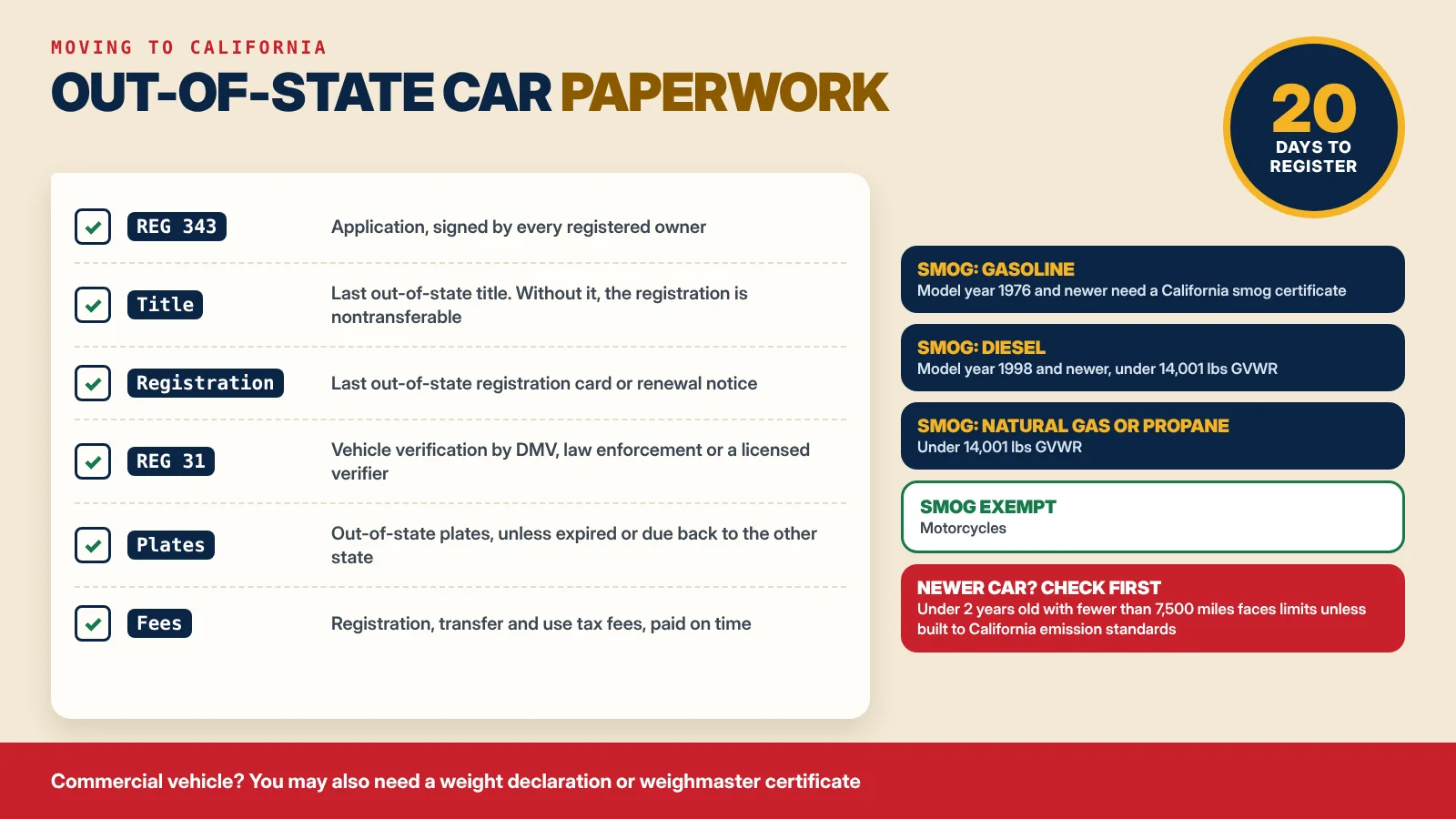
Tap the checklist to open it full size.
What Do the Buyer and Seller Each Do in a Private Car Sale?
Both sides have their own job and their own deadline. The timeline shows how they line up after the sale.
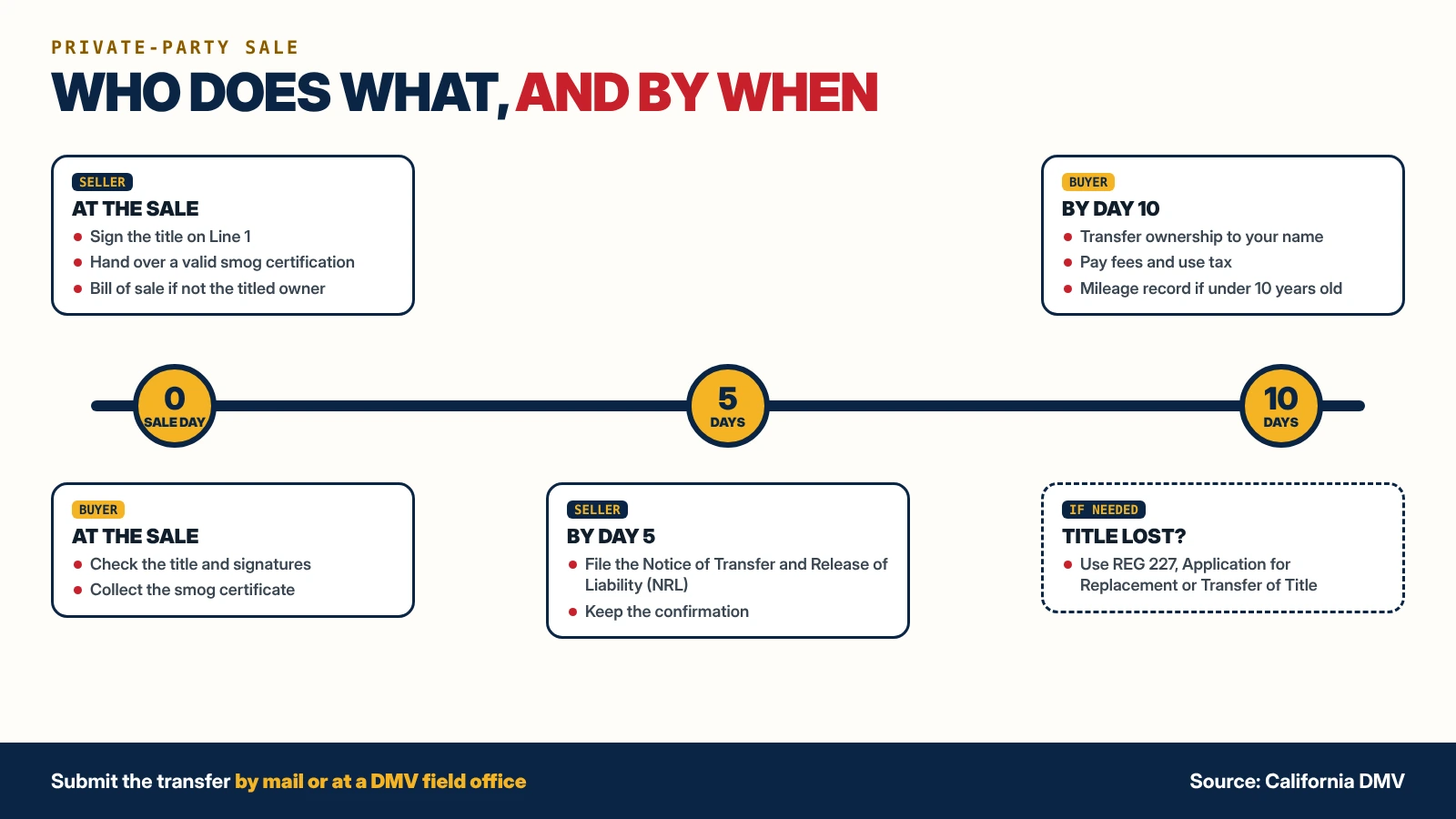
SELLERHands over
- The title, signed on Line 1
- A valid smog certification
- A sale report (NRL) filed with DMV
BUYERTakes care of
- Transfer to DMV by mail or in person
- Fees and use tax
- A mileage record if under 10 years old
Tap the timeline to open it full size.
How Much Does It Cost to Register a Car in California?
There’s no single price. DMV says an exact amount is only worked out when you submit the application, but its fee calculators give a solid estimate for new, used and out-of-state vehicles.
Registration fee
Paid on original registration and every renewal.
Vehicle license fee
Based on the purchase price or value of the vehicle.
Use tax
On a purchase, depending on your city and county.
Transfer fees due
Pay transfer fees within 10 days of the sale. A late penalty applies after 30 days.
Keeping the car current after this? Our registration renewal guide explains the yearly bill and late penalties. Need an office for the transfer? Use our DMV office and partner finder, or see how to book a California DMV appointment.
California DMV Vehicle Registration FAQs
How long do I have to register my car after moving to California?
You have 20 days to register your vehicle after you become a California resident or get a job here.
How long does a buyer have to transfer a car title in California?
Buyers have 10 days after the purchase to transfer ownership into their name.
What does the seller have to do after selling a car?
The seller signs the title, gives the buyer a valid smog certification, and reports the sale to DMV with a Notice of Transfer and Release of Liability within 5 days.
Do I need a smog check to register an out-of-state car?
Usually, unless the vehicle is exempt because of its age, fuel type or weight. Our California smog check guide lists the exemptions.
Who can do the VIN verification for an out-of-state vehicle?
The Verification of Vehicle form (REG 31) can be completed by an authorized DMV employee, a law enforcement officer, or a California-licensed vehicle verifier.
Does a car from a family member need a smog check?
No, DMV says a car given by a family member doesn’t need a smog inspection, unless they bought it for you without first titling it in their name.
How much is use tax on a car in California?
Use tax ranges from 7.25% to 10.25%, depending on the city and county where you live.
Can the dealer register my new car for me?
Often, yes. Many California dealers can transfer the title and issue temporary registration. Permanent registration and stickers then arrive by mail.